I am always amused when, after touchdown, passengers are thanked for having chosen to travel by X or Y airline. In my case, and I imagine it is the same with others, the main choices concern cost and time. However, after a weird experience with British Airways recently, I decided to give Virgin Atlantic a chance to boost its profits with my money.
It happened like this: when I reported at Rome’s Leonardo da Vinci airport on my way back from a conference, the woman on the British Airways desk told me that I could not board the flight on which I had been booked, because I should have been on an earlier one. When I showed her the evidence of my travel documents, she proceeded to say that I could not possibly have flown over the day before – which I had – because there was no record on the system. Then, to cap it all, she said that I should have to pay all over again. Now, your correspondent did not get where he is today putting up with this sort of nonsense, and I stood firm. My advice to anybody who finds themselves in similarly bizarre circumstances is not to fly off the handle but, well, to stand firm.
The scene shifts to last Monday night, when I was on my way back from Washington after attending the annual conference of the World Bank and International Monetary Fund. In keeping with the chancellor’s austerity programme I was travelling “premium economy” on Virgin Atlantic. Having attended IMF meetings for many years I find that memories come flooding back on such occasions: thus it was that, in conversation with a fellow passenger, I recalled travelling to the Bangkok meeting of 1991, and having a drink on the aircraft with Norman Lamont, who was then chancellor.
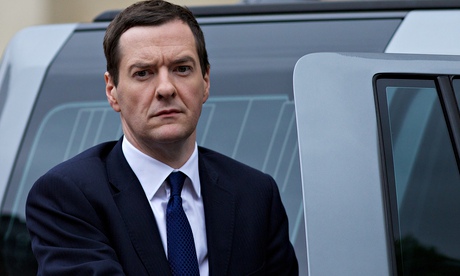
“Oh,” said my interlocutor. “Did you know that the chancellor of the exchequer is on this plane?” Well, I did now. Our paths had not crossed in Washington; but it appeared that George Osborne was further up the plane, travelling – wait for it – in upper class. Yes, I kid you not. The most dangerous chancellor I have encountered in my entire career, who wishes to pulverise the welfare system and the public services generally with a further package of dramatic “cuts” in the next parliament, was treating himself to a break from austerity in what Virgin Atlantic call upper class.
Now, I should emphasise that I am not one of those killjoys who believe that ministers and public officials working on confidential documents should be expected to slum it. But it is surely symbolic that the chancellor of a government that proclaims that “we are all in this together” should be travelling upper class while inflicting needless and often dangerous cuts on the public services.
It has to be faced that the Conservative party has travelled a long way from the party of Harold Macmillan and Sir Ian Gilmour – both supposed to be heroes to our prime minister. I am now hearing from people in the public services who would never describe themselves as “lefties” that they fear for the social fabric of this country should the Conservatives win the next election.
The true motives behind the chancellor’s so-called “long-term plan” could hardly be more manifest. And the brazenness of a prime minister who openly proclaims his plans for tax cuts at the expense of maintaining decent levels of public spending could almost come from the dialogue of the recent film Riot Club, which, in somewhat exaggerated form, indicates upper class contempt for the “lower orders”.
We seem to be at a curious juncture: in many ways the Reagan/Thatcher “settlement” of the 1980s is unravelling; yet in the Conservative party of David Cameron, George Osborne and Lord Freud we witness policies at which even Margaret Thatcher might have baulked.
Which brings me back to that IMF meeting in Bangkok in 1991. That was the year of the formal collapse of the Soviet Union, and the apotheosis of what became known as “bourgeois triumphalism”. Under Reagan and Thatcher we had embarked on this era of deregulation and privatisation, much of which the subsequent Clinton administration and New Labour governments accepted.
The financial crisis and the great recession, indeed depression, undermined many of the assumptions of bourgeois triumphalism. It was abundantly clear at last weekend’s annual meeting of the World Bank and IMF that the financial crisis has not gone away, as the financial markets realised in the course of last week, with gyrations redolent of sheer panic.
For me the lull before the storm was illustrated by the complacent attitude of the Federal Reserve’s vice-chairman Stanley Fischer, in his question and answer session after the annual Per Jacobsson lecture – not least when he dismissed that great central banking veteran Paul Volcker’s call for a more structured international financial system. I once termed those who gather at IMF meetings as “the international debt set”. Last weekend one detected signs of panic in the ranks: much concern about so-called “secular stagnation” and “the new mediocre” with regard to the sluggish world economy. Yet, although even the IMF is crying out for the classic Keynesian boost to infrastructure spending, there is precious little sign of a favourable response from policymakers, especially in the beleaguered eurozone.
