
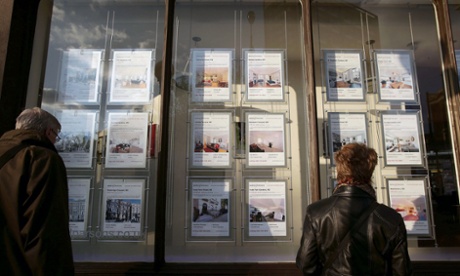
A drop in the number of mortgages approved by lenders last month has added to growing evidence that the UK housing market is cooling.
The fall in approvals, reported by the Bank of England, was larger than expected and comes as Threadneedle Street moves to take some of the heat out of the market.
There were 61,267 mortgages approved in September, down from 64,054 in August, which represents a 14-month low.
Howard Archer, chief UK and European economist at IHS Global Insight, said the figures showed a moderation in housing market activity.
While the tougher lending requirements – known as the mortgage market review – could explain the drop in mortgage approvals earlier in the year, Archer said they could no longer explain the fall-back. “That mortgage approvals are still falling and in September were 19.9% below their January peak levels – after lenders have now likely got to grips with the new mortgage regulations – points to an underlying moderation in housing market activity,” Archer said.
But he said the perception that interest rates will not rise from their 0.5% low until after the election could provide a “near-term lift” to the housing market. Rates were set at a record low of 0.5% in March 2009 amid the banking crisis and in recent days two deputy governors of the Bank of England have downplayed any urgent need for a rate rise, which has fuelled these expectations.
Only a day ago, Sir Jon Cunliffe, one of the deputy governors, said: “The softening in the pay and inflation data, together with the weaker external environment, for me implies that we can afford to maintain the current degree of monetary stimulus for a longer period than previously thought”.
The Bank of England had already started to take steps to try to act against over heating of the housing market by recommending that lenders restrict the amount of lending to borrowers to 4.5 times their income. This was not expected to have any immediate impact on the housing market. and intended to stop household debt potentially destabilising financial stability.
Economists at Capital Economics said this intervention by the Bank of England made have lenders more cautious but said they did not expect the reduction in mortgage approvals to continue.
“Taking a step back from the regulatory environment, the macroeconomic backdrop is still supportive of a gradual recovery in lending. The economy is growing at a robust pace, and the employment rate continues to rise, which would usually be expected to boost mortgage activity. Further more the threat of an imminent rise in interest rates is receding,” Matthew Pointon, property economist at Capital Economics said.
Halifax, the country’s largest mortgage lender and part of Lloyds Banking Group, reported that house prices were still rising in September, with a rise of 0.3% – the eighth consecutive monthly increase.
Foxtons, the estate agnecy that focuses on London, last week warned that buyers in the capital were becoming more cautious after a near 20% rise in house prices and that sales commissions had fallen by 7.8% in the third quarter to £16m.
