
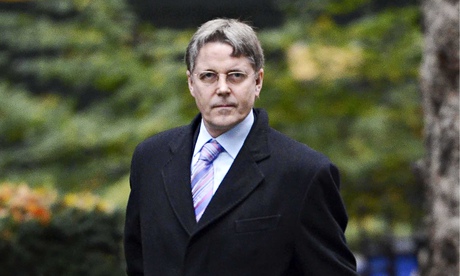
The UK's most senior civil servant has hit back against Alex Salmond's accusation that the Treasury leaked market-sensitive information about the future of RBS in Scotland as part of dirty tactics to undermine the yes campaign.
Jeremy Heywood, the cabinet secretary, wrote to Salmond rejecting any suggestion of improper interference by civil servants in the independence debate, saying the Treasury had merely confirmed that RBS was drawing up contingency plans. This had taken place outside the hours of stock exchange trading.
The story about the bank's plans – confirmed on Thursday morning to the London Stock Exchange by RBS – sent its shares down overnight on the Asian markets, the first minister said.
Afterwards, Salmond said he was demanding a formal leak inquiry by Sir Bob Kerslake, the head of the UK civil service, and would be sending in an official complaint. He also insisted the BBC had a duty to cooperate, implying it should reveal its source.
The first minister's attack on the Treasury came after a series of warnings and announcements by Lloyds, TSB and RBS that they would move their registered offices and some operations to England if there was a yes vote. Retailer John Lewis said its prices could rise in an independent Scotland. Later, it emerged that Downing Street has been exerting pressure on large businesses to speak out about the negative impacts of independence.
The first minister said the story about RBS was a clear breach of Treasury and civil service rules, which ban any official from releasing market-sensitive information. He said the offence was doubly serious since the UK government owns 80% of RBS shares. "It is a basic rule that it can't be released prior to the announcement at 7am this morning. This is a matter of enormous gravity," Salmond said.
He accused the Treasury of being a significant force in the no campaign, saying: "They've now been caught red-handed as being part of a campaign of scaremongering." There were now "Treasury fingerprints all over" a campaign of "intimidation and bullying which has served the no campaign so badly", he added.
Speaking at a referendum press conference in Edinburgh, Salmond told the BBC's political editor, Nick Robinson, that the corporation had an obligation to help the investigation.
He said: "I have always respected the journalistic right to protect sources but I know that the BBC will want to support the investigation by [Kerslake] in the leak of this market-sensitive information. It is as serious a matter as one can possibly get. Therefore I know that the BBC in its impartial role as a public sector broadcaster will give full cooperation to the inquiry."
However, in his letter to Salmond, Heywood wrote: "It was clear to the Treasury that this was likely to generate significant interest in – and uncertainty about – an issue with important implications for financial stability. In response, therefore, the Treasury press office confirmed its understanding of RBS's contingency planning.
"This was not a UK government announcement; it was simply a confirmation of the Treasury's understanding of RBS's contingency planning."
The BBC has defended its conduct, insisting it was justified in publishing the RBS story: "We note that Alex Salmond has called for an inquiry and we will await a decision on that request. The story in question was accurate and BBC News exercised normal editorial judgments."
