
The first precursor to what became the Lions tour, in 1888, was not officially sanctioned by rugby's authorities but was the creation of two commercially savvy cricket enthusiasts. With the template set by the marathon 35-match jaunt around Australia and New Zealand organised by Alfred Shaw and Arthur Shrewsbury, the rugby authorities were quick to recognise its potential. The entrepreneurial, commercial mindset stuck, and has only accelerated since the game went professional.
So when visitors arrived at the hotel where Warren Gatland's squad gathered for the first time in the leafy wedge of west London between the Thames and the M4, they were greeted by a convoy of Land Rovers, one of the line-up of official Lions sponsors. Outside on the lawn, men in all-in-one lycra outfits chucked a rugby ball around as part of a marketing stunt for one of the many Lions sponsors and partners.
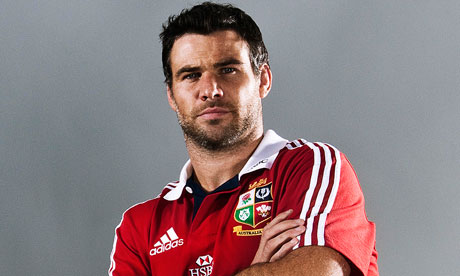
Inside, piles of official Adidas Lions kit were lined up waiting to be collected by the 37-strong squad – the engine of a merchandising machine that has become a huge moneyspinner for the sportswear giant, while the relationship with "principal partner" HSBC, whose logo is emblazoned on those shirts, has endured beyond the financial crash.
Tim Crow, the chief executive of the sponsorship agency Synergy, has worked on behalf of several Lions sponsors down the years including NTL, the cable giant that later became Virgin Media, and Guinness. "The growth of it is unbelievable. We worked with NTL in 2001 on the shirt sponsorship – they paid less than £1m. HSBC are paying seven or eight times that now. In a decade that is pretty incredible," says Crow.
In hindsight, the 1997 tour overseen by Sir Ian McGeechan and led by captain Martin Johnson looks like something of a watershed. The 1991 tour was the first to break even for British and Irish Lions Ltd, the wholly owned subsidiary of the four unions. Before that, the tours of the southern hemisphere had been considered loss leaders. The last one, the narrow loss to South Africa in 2009, generated the most profit of any so far – around £4m.
It was the success of the 1997 vintage, allied to the wider audience attracted by the tour film Living With the Lions and the personalities in a squad breaking new ground as the game found its feet in the professional era, that created an alchemy that marketeers have been keen to tap into ever since.
Crow believes that in a saturated sporting landscape, the scarcity of a Lions tour increases its value. "It's the mystique factor. It is unique and has this unique heritage. It is once every four years and it's the best of the best," he said.
The HSBC ad campaign unashamedly taps into that spirit of buccaneering adventure, featuring famous Lions names aboard a ship heading for Australia in a tongue-in-cheek recreation of the first tour 125 years ago. "The sport swells and it draws in people who aren't traditional fans. It lands with the rugby heartland of that affluent audience but also draws in general sports fans," says Crow.
The imperative to work closely with sponsors and maximise income is also driven by the fact that the home nations don't see a penny of the television money generated by the tour. The British and Irish Lions rights are part of the package that was sold to News Corp-related companies as part of a wide ranging five-year deal worth $437m in 2010. It secures the matches for Sky Television in New Zealand, SuperSport in South Africa, Foxtel in Australia and BSkyB in the UK. But all that income goes to Sanzar, the alliance between the southern hemisphere rugby unions.
Crow says that the Lions have been comparatively slow to embrace new media and innovative thinking, but the squad will have their own smartphone app for the first time in 2013, which could open up new revenue streams. Sky has also helped continue to ramp up the profile of the Lions, with rolling coverage of the squad announcement and the endless speculation that accompanied it.
Now that the BBC has exclusive rights to live Six Nations rugby, an arrangement that has also helped the renaissance of that competition and made stars of the players who make up the Lions squad, the pay-TV broadcaster is all the more determined to make the most of its rugby union jewel in the crown.
Adidas, for whom shirt sales of the distinctive red jersey rivalled some of its biggest-selling football replica in 2009, is expected to launch a marketing campaign playing on 2013 being a year of sporting rivalry with the Australians and cross-promoting its Ashes and Lions relationships. If 2012 was dominated by the Olympics for the company, 2013 has been identified as the summer of the Lions and the Ashes.
For the first time, the Lions is also selling its own official tour packages instead of simply licensing out the operation. While the numbers of fans travelling in 2009 in the wake of the economic crash was noticeably down on previous tours, there were still an estimated 30,000 paying thousands of pounds for the privilege. In 2001, an estimated 25,000 fans made the trip to Australia.
But for the Lions to continue working their commercial magic, Crow believes they also need to deliver on the pitch. "1997 is starting to feel like a long time ago. They've got to win the series, if they don't it will be 20 years since they won. They were close in 2009 but Australia is the one that is easiest of the three. If they don't, it won't be great for the Lions as a brand."
