
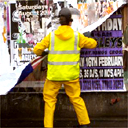
Once the preserve of indie music labels looking for a cheap way of promoting their acts, flyposting is now big business.
But the advertising industry is split over the ethics of the practice, according to a survey from the poster-buying company, Concord.
A poll of 100 top directors found that while the majority of creative directors actively support flyposting, most media directors condemn the practice.
A whopping 77% of creative directors said they would happily use flyposting - posting ads illegally on public property - while 80% of media directors gave it the thumbs down.
However, if put under pressure from clients, 44% of the media directors asked said they would relent.
This year, the industry's most prestigious creative accolade was awarded to a guerrilla advertising campaign that involved putting posters on paths, lamp-posts and buildings.
The advertising agency, Mother, was handed a D&AD gold pencil for its campaign for Britart.com.
Mother attached labels to everyday objects on London's streets - such as pavement slabs and concrete walls - describing the objects as works of art.
Local councils reacted furiously to the results of the survey.
"The brutal truth is flyposting is illegal and local authorities have a duty to remove it," said a spokesman for Lambeth council.
"It is disquieting the advertising industry thinks it is OK to break the law."
Camden Council spends £100,000 each year removing illegal posters and has successfully prosecuted seven large companies - including Mercury Records, EMI Records and the Brixton Academy - for flyposting.
"Illegal flyposting is a cheap form of advertising for companies who have little regard for the victims of this urban crime - local authorities and their residents," said a spokesman for the council.
