
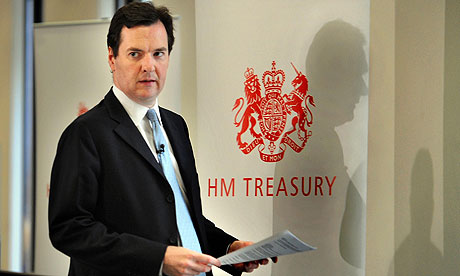
George Osborne says, via his official spokesman, that he is committed to forcing banks to publish the pay brackets of their big earners on a no-names basis. Good. The scheme, devised by Sir David Walker, is a worthwhile reform. It is also very modest. If the coalition government could not hold its nerve on this minor matter then the new Independent Commission on Banking, examining the case for structural reform, would be redundant.
One of the banks' main objections is that disclosure could prove counter-productive – it might encourage a "keeping up with the Joneses" mentality in which everyone demands to be paid top dollar. This is a curious argument. Do bank boards really view their employees as a rapacious, bonus-hungry mob whose threats they struggle to resist? Maybe they do.
But, if so, surely a better solution than silence is to put a few sketchy details in the public domain and enlist public opinion and investor pressure as a restraining force – "Sorry, £2m a year would be tricky to explain, how about £1.5m?"
Alternatively, bankers argue that is invasion of privacy to have their pay published, even within pay bands with no names attached. Sorry, but it's a little late in the day to be coy. "Inappropriate remuneration structures", as Walker put it, contributed to the severity of the financial crisis, as almost every inquiry has agreed. It is fair for shareholders and the public to know more about how much is being earned at the big banks and how.
Thankfully, Osborne has not gone soft, we are told. All that remains, then, is for the government to enact the legislation. Walker's report was published in July last year. The last government, if it had got its skates on, could have had forced the pace to ensure disclosures were made in this year's annual reports, published around March.
The current chancellor is anxious to show he's made of sterner stuff than the last lot. It would be shocking if he were to miss the deadline for next year's annual reports. Get on with it.
