
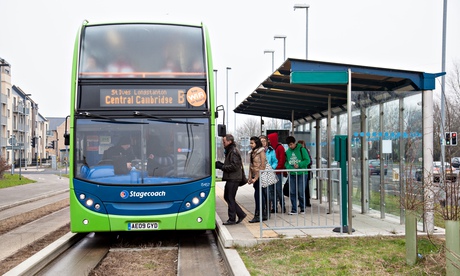
Shareholders in Stagecoach, the bus and train operator, backed its remuneration report at the annual general meeting, despite calls to oppose it.
Pirc, the shareholder advisory group, advised its clients to vote against the report at Friday’s meeting, arguing that the £1.5m pay for Martin Griffiths, Stagecoach’s chief executive, is excessive and out of line with financial performance.
Pirc pointed out that Griffiths’s pay including bonuses was more than double his £614,000 salary. Griffiths was paid £2.2m the year before.
At the meeting 99.4% of votes were cast in favour of the pay report.
A spokesman for Stagecoach said: “Real shareholders haven’t paid any attention to what Pirc has said. It’s bizarre that last year Pirc approved our remuneration report and this year nothing has changed.
“In fact, total executive remuneration has gone down significantly. The people who invest in the company and have enjoyed returns from the company’s performance have given their overwhelming endorsement to the remuneration report.”
Maybe Pirc, a doughty opponent of boardroom excess, needs to pick its battles. Still, there’s always next year.
Calm at the Co-op
It’s more than two years now since troubled erupted at the Co-operative Group, which reports first-half results this week. The customer-owned business was thrown into turmoil in 2013 by a crisis at its banking operation.
As is so often the case, that problem exposed other flaws and ineptitude and the group reported a £2.5bn loss for 2013. To shore up its finances, the group has sold 80% of the Co-op Bank, its farms and its pharmacies. That leaves the core grocery business plus funeral parlours, general insurance and some small operations.
On top of the group’s financial and strategic troubles, it has also had to deal with a governance mess that prompted former chief executive Euan Sutherland to flounce out in March last year after details of his £6.6m pay deal appeared in the Observer.
With all that behind it, the group can start to look forward after returning to profit last year. It is cutting prices and adding staff to its grocery stores while opening hundreds of new convenience outlets. In a terrible market for food retailing, the Co-op’s grocery stores grew in the three months to July and performed better than the wider market, figures from Kantar Worldpanel showed.
Richard Pennycook, the group’s chief executive, and Steve Murrells, its retail boss, will give more details with the results. Last year’s profit was helped by sales of businesses, so the first-half headline figures might not look quite so rosy.
Mario needs to take it up a level
With all the attention on the People’s Bank of China and the US Federal Reserve, Mario Draghi, the head of the European Central Bank, has had a relatively quiet summer. Turmoil in China and constant speculation about when the Fed will start to increase interest rates have diverted attention from the eurozone’s woes now that the Greek crisis has been patched up.
Well, Draghi’s back in the spotlight on Thursday when the ECB announces its monetary policy decisions. In a global world, events in China could have some unwelcome effects on the eurozone.
Falling oil prices have been treated as a boon in the UK, at least for now, because they have increased the spending power of consumers. But for Draghi that could be a problem because he is trying to stop prices of goods from falling in the eurozone. What’s more, the euro has become an unlikely haven for investors, pushing up its value and making the eurozone less competitive while stifling inflation, which the eurozone needs more of.
The euro has risen even as the ECB has been printing money through quantitative easing. Draghi fought a long campaign to overcome hostility to QE in Germany and now outside events threaten to stop it working. The ECB may need to do more.
• This article was amended on 1 September 2015. An earlier version of the Stagecoach report was written in anticipation of the meeting which in fact had already been held.
