
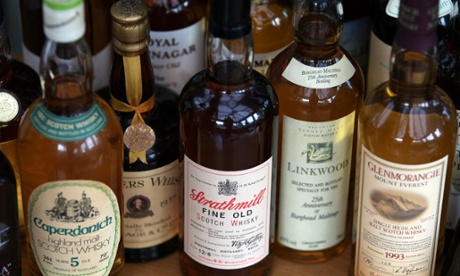
George Osborne is coming under pressure from the powerful Scotch whisky lobby to cut the hefty duties on one of Scotland’s prime industries in next week’s budget after a sharp slide in sales last year.
The Scotch Whisky Association has disclosed that domestic sales of whisky fell by 5% to 83m bottles last year, in parallel with the industry’s worst overseas sales for 25 years in 2014. The association said the slump was caused largely by “onerous” levels of tax and duty, with UK sales falling 10% since 2009.
David Frost, the SWA chief executive, said total duty and tax payments made up 78% of the average price of a bottle of whisky, and urged the chancellor to introduce a 2% cut in Wednesday’s budget to help revitalise sales.
Claiming a price cut would increase sales and therefore overall duty and tax income for the Treasury, supporting an industry worth around £5bn to the economy, Frost said: “Scotch whisky is a massive export success for the UK so it’s obviously disappointing to see this decline in volumes in our domestic market. In next week’s budget the chancellor has the perfect opportunity to support an important UK industry.”
The SWA’s appeal, which echoes similar strident demands for tax cuts from the North Sea oil industry after the recent plunge in oil prices, was criticised by alcohol action campaigners.
Eric Carlin, director of Scottish Health Action on Alcohol Problems, set up by Scotland’s medical royal colleges and faculties, said there were compelling grounds for keeping the price high. Alcohol-related deaths and illnesses were still a significant social and financial challenge, particularly in Scotland, where alcohol misuse problems were still 20% to 30% higher than in England, he said.
“Now is not the time to be signalling that we should be cutting alcohol prices,” Carlin said. “We would strongly oppose anything which reduces the price of alcohol.”
Duty on spirits was frozen in the 2014 budget with the chancellor scrapping the alcohol duty escalator, which had risen each year from 2008 by 2%.
